
Agriculture, growing systems, facilities and processing.
O3 AG Science designs, builds, integrates and supports treatment systems for farms, controlled growing, animal operations, packing, processing, storage, sanitation and water reuse. We fit the program to the operation, then measure its results.
2026 field record: 519.5 harvested tons across three alfalfa cuttings, with 20% less water than this case’s standard comparison. The evidence is immediately below.
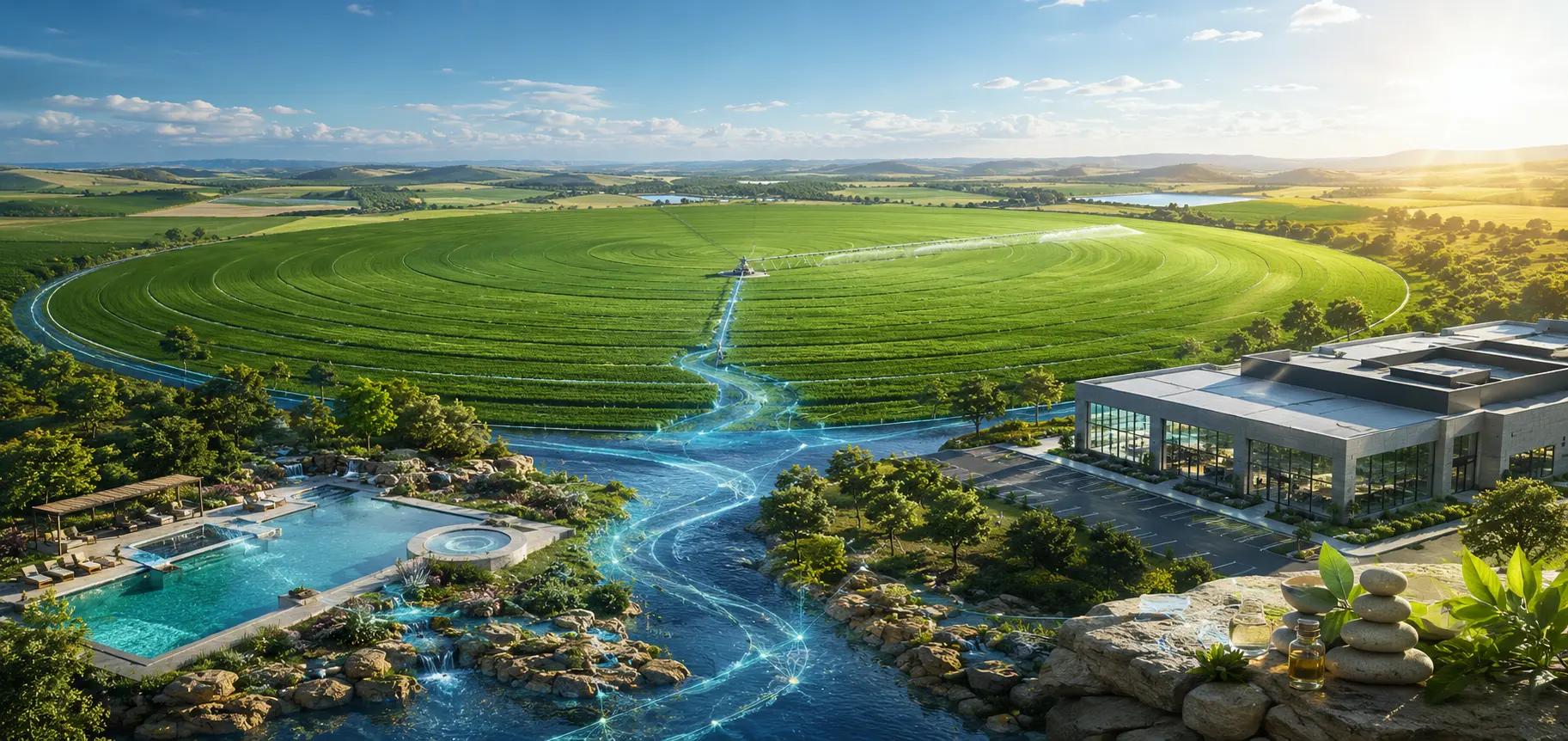
 FROM WATER TO HARVESTGrowing · Facilities · Processing · Evidence
See the evidence before choosing a path.
These findings show why growing, sanitation and facility treatment each need their own system design and measurements. Read the summary here, then open the matching record or facility page when you want more detail.
519.5 tons across three cuttings
The alfalfa harvest rose from 156.2 to 171.2 to 192.2 tons. The record includes 656 bales, measured weights and a 20% water reduction against this operation’s standard comparison. It is a documented case result, with the chart and context below.
See the growing record →Four years of output records
The O3 field increased from 965 bales in 2018 to 1,344 in 2021 (+39.3%); a separate control field went from 503 to 402 (−20.1%). The O3 field records a 10% water cut. These are field bale counts, not acreage-adjusted yield claims.
Read the historical case →Defined results at the use point
Our lab booklet reports company facility testing with reductions up to 99.9999% in specified produce, meat and fish packing, milk-storage tank and processing settings. Results depend on dose, contact, load and verification; that figure is not a blanket result for every facility.
Read the sanitation lab record →Wash water, handling and cold-chain conditions
Produce operations need wash-water treatment matched to soil and organic load, product contact and turnover. Filtration, monitored treatment and corrective action support cleaner process water; storage adds air, moisture and product-quality controls.
Explore packing and processing →Water and sanitation in daily operation
Drinking and process water, equipment washdown, milk-handling areas and storage tanks are separate treatment points. We map each one, establish operating records and fit maintenance to the facility’s routine.
Explore dairy sanitation →Process, surfaces, air and wastewater
Plants need treatment designed for each product and use point: aqueous contact, equipment sanitation, controlled air and wastewater. Contact conditions, worker safety and microbial or quality endpoints determine the program.
Explore processing applications →We also work with field irrigation, greenhouses, hydroponics, aquaponics, poultry, swine, feedlots, grain and other agricultural facilities. Read the facility applications.
What happened in the field.
The three-cut alfalfa case is a measured harvest, not a projection. Harvested weight rose during the season. Water reduction is compared with this case’s stated standard and is not a promise for every field.
519.5 tonsRecorded total across 656 bales and 1,038,900 pounds.
20% less waterAgainst the documented standard comparison for this case.
23.0% riseThird-cut weight versus first-cut weight in this field.
A distinct East Field versus West Field comparison records May 22 BRIX of 17 versus 6.5 and harvested production of 167.993 versus 123.348 tons. We keep the two comparisons separate and retain weather, cutting and operating context with the case.
Read the complete 2026 case, pages 74–89 →Treatment starts with the operation’s water and ends with measured performance.
We test the source and define the objective, then size O3 generation, transfer, dose, contact and delivery for actual flow, pressure, chemistry and demand. For pressurized irrigation, the treatment is engineered into the supply before the pivot point and delivered through the lateral and sprinkler package. Soil, root-zone, crop and harvest records tell us whether the program is meeting its goal.
That design discipline extends beyond fields. Controlled growing and aquaculture require managed recirculation and biology. Packing and processing need water and surface sanitation matched to their process. Animal facilities, storage and reuse each have their own delivery, controls, monitoring, service and documented endpoints.
Read how the system works →Books, reports, lab evidence and video.
Agricultural Applications & Evidence
Applications, engineering conditions, reported laboratory results, 2026 field performance, 2018–2021 field history and crop response.
Read the evidence book (PDF) →Reported Lab Results
Reduction-rate evidence separated by target, treatment medium, dose, contact and endpoint, with the facility sanitation record identified.
Read the lab-results booklet (PDF) →Field and forage analysis
The companion second-cut snapshot includes BRIX, MicroBio, harvested bales and forage testing. Its earlier 22% water figure is distinct from the full-season 20% comparison above.
Read the 2026 report (PDF) →O3 AG Science video
See the systems and applications across farms, controlled growing, animal operations and facilities.
Plan a system for your operation.
From source-water review to design, installation, verification and service agreement, we build around your farm, facility or process.
Request a project review →